Add Rustic Charm with PNG Twine 1 Elements
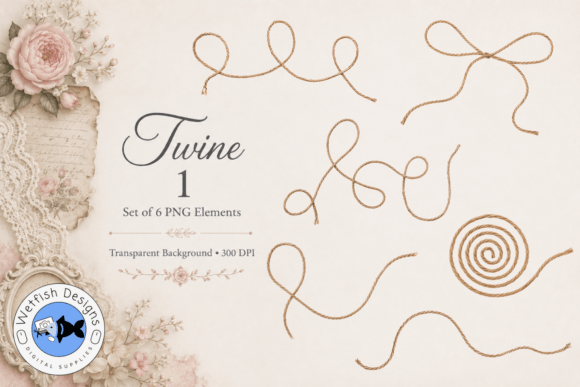
Sometimes, the most impactful design details aren't complex illustrations or bold graphics. They're the subtle, tactile textures that ground a layout and add a layer of authentic warmth. That's precisely the role of PNG Twine 1, a collection of six natural twine elements designed to bring a handcrafted, rustic quality to your digital projects. These aren't just simple lines; they are meticulously crafted pieces featuring twisted fiber textures, delicate loops, curls, swirls, and winding accents that mimic real twine.
Understanding the Visual Language of Twine
The appeal of PNG Twine 1 lies in its organic, imperfect character. Each element is designed to look and feel like a piece of natural fiber that has been twisted, tied, or arranged by hand. You'll find variations that include graceful bow shapes, loose curls, and sturdy winding accents. This variety allows for creative flexibility. The warm, neutral color of the twine is intentionally versatile, ensuring it complements a wide range of color palettes without clashing. It’s a design asset that speaks to a preference for the handmade and the heartfelt, making it a staple for projects where authenticity is key.
Where Rustic Textures Shine: Practical Applications
The true value of a design element is measured by its utility. PNG Twine 1 excels as a layering tool across numerous creative disciplines. For scrapbookers and memory keepers, these elements are perfect for adding realistic ties to journal cards, creating decorative borders for photos, or serving as cluster fillers that add depth and interest. In the world of digital planning and bullet journaling, a small twine swirl can become a charming checkbox or a decorative accent next to a task.
Beyond personal crafting, these elements have significant commercial appeal. Small business owners and marketers can use them to enhance social media graphics, giving promotional posts a more approachable, artisanal feel. They work beautifully in packaging design mockups, suggesting a product that is wrapped with care. For bloggers and content creators, incorporating twine accents into featured images or printable resources can strengthen a brand identity rooted in vintage, farmhouse, or shabby chic aesthetics. The elements are equally at home on wedding invitations, heritage project layouts, and botanical-themed cards.
Integrating Twine into Your Design Workflow
Using PNG Twine 1 effectively requires a thoughtful approach to composition. Because the elements are provided as individual PNG files with transparent backgrounds, they can be placed anywhere in your design stack. Consider them as part of your overall visual hierarchy. A bold twine bow can serve as a focal point on a tag, while a subtle winding accent can guide the viewer's eye across a page layout.
When pairing these textural elements with typography, contrast is your friend. The organic, hand-touched feel of twine pairs exceptionally well with clean, modern sans-serif fonts for a balanced look. Alternatively, combining it with a classic serif font can enhance a vintage or editorial style. For projects leaning into a fully rustic theme, a complementary script font or handwritten font can be a perfect match, creating a cohesive and inviting atmosphere.
Evaluating Fit and Quality
Before integrating any design asset into a professional project, assess its technical quality. PNG Twine 1 is created at 300 DPI, making it suitable for both digital use and high-resolution print projects. The transparent backgrounds ensure seamless integration over any color or pattern. When testing these elements, pay attention to scale. Resize them appropriately for your medium—what works as a large accent on a scrapbook page might need to be a tiny detail in a logo design.
Finally, always consider the context of your project. These elements are designed to add charm and texture. They are excellent for brand identity work that requires a personal touch, for editorial design that tells a story, or for creating a cohesive look in a digital product line. Their strength is in their ability to evoke a specific feeling—warmth, nostalgia, and care—which can significantly enhance audience engagement and make your designs more memorable.